
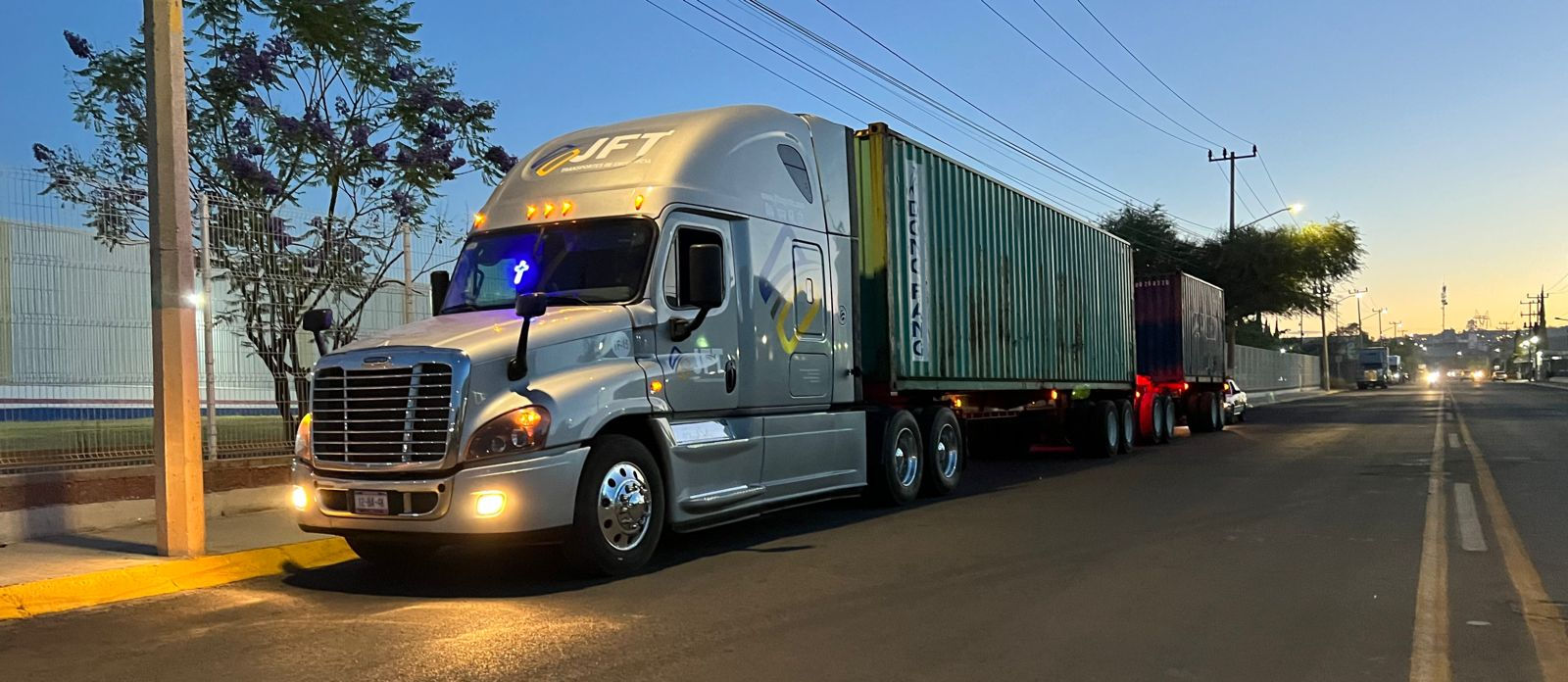
Manzanillo Port Logistics: How Freight Moves From Vessel to Inland Mexico

Actualizado: 3 sept

Quick answer: Freight leaving the Port of Manzanillo moves through five stages - vessel discharge, customs clearance, container release, drayage out of the port zone, and long-haul trucking inland. With clean documents and a green customs light, a standard import typically leaves the port in 3 to 7 days and reaches Guadalajara, the Bajio or Mexico City within 1 to 2 additional days by truck.
Why does so much of Mexico's cargo enter through Manzanillo?
Manzanillo, in the state of Colima, is Mexico's busiest container port and the country's main Pacific gateway. It is the default entry point for cargo arriving from China, Vietnam, South Korea, Taiwan and Japan, and it feeds directly into the industrial corridor that runs through Guadalajara, the Bajio region and the Valley of Mexico.
Three structural reasons explain the concentration:
Sailing distance. Trans-Pacific services reach Manzanillo without transiting the Panama Canal, which removes days and canal costs compared with Gulf coast routing.
Inland connectivity. Federal highways and a rail link connect the port directly to Guadalajara, Leon, Queretaro, San Luis Potosi and Mexico City - the belt where most Mexican manufacturing and distribution sits.
Service density. More carrier calls mean more sailings per week, more equipment availability and more room to recover when a vessel is delayed.
What happens to a container after the ship arrives?
Discharge and yard placement. The terminal unloads the container and stages it in the yard. Free time starts counting here, not when you file paperwork.
Documentation and customs filing. Your customs broker files the pedimento with the commercial invoice, packing list and bill of lading.
Customs selection. Mexican customs runs an automated selection process. A green light releases the cargo; a red light triggers a physical or documentary inspection.
Release and drayage. Once released and terminal charges are paid, a local tractor pulls the container out of the port zone to a warehouse, a transload facility or directly onto a long-haul lane.
Long-haul transport. The freight moves to its final destination by truck or rail.
How long does customs clearance take at Manzanillo?
A clean, green-light clearance is usually completed in 1 to 3 business days once the pedimento is filed. A red light adds 2 to 5 business days, sometimes more if the inspection raises classification or valuation questions.
The delays that actually hurt importers are rarely customs itself. They are:
Incomplete or inconsistent documents. A mismatch between the invoice, packing list and bill of lading stops the file before it ever reaches customs.
Missing NOM compliance. Many product categories require Mexican official standard certification and labelling before release. Sorting this out at the port is far more expensive than sorting it out at origin.
Padron de importadores issues. The importer must be registered, and some product categories require a sector-specific registry as well.
Peak season congestion. Yard density rises sharply in the months before Christmas and around Chinese New Year departures.
What is drayage and why does it matter here?
Drayage is the short move that pulls a container out of the port zone and delivers it to a nearby warehouse, transload point or staging yard. It is a small distance and a large share of the risk.
In Manzanillo, drayage capacity is the bottleneck most importers underestimate. The port zone has limited road access, gate appointments are finite, and during congestion the queue - not the distance - defines the schedule. Booking drayage before the vessel arrives, rather than after release, is the single most effective way to compress total port dwell time.
Free time, demurrage and detention: the costs that surprise importers
Free time is the number of days the terminal and the shipping line allow before charges begin. It is typically a handful of days and it varies by carrier contract.
Demurrage is charged when the container sits inside the terminal beyond free time.
Detention is charged when the container has left the terminal but has not been returned empty within the allowed window.
These charges accrue per container per day and escalate in tiers. A shipment that clears in four days and one that clears in eleven can carry very different landed costs even though the ocean rate is identical. This is why total port dwell time, not the freight rate, is the number worth managing.
Truck or rail from Manzanillo?
Truck makes sense when you need door delivery, a defined delivery window, fewer than a full block of containers, or the destination sits outside a rail-served corridor. It is the more flexible option and the one most importers use for the Guadalajara and Bajio lanes.
Rail makes sense when you are moving high, steady volume to a rail-served inland terminal and your schedule can absorb longer, less precise transit. Cost per container drops; predictability drops with it. Rail also still requires drayage at both ends.
Many operations use both: rail for baseline replenishment volume, truck for anything time-sensitive or irregular.
What documents does an import through Manzanillo require?
Pedimento de importacion, filed by a licensed Mexican customs broker
Commercial invoice
Packing list
Bill of lading
Certificate of origin, when a trade agreement preference is claimed
NOM certificates and compliant labelling, where the product category requires them
CFDI with Complemento Carta Porte for the domestic road move - confirm the current version with your carrier before dispatch
The Carta Porte requirement is the one that most often catches foreign shippers by surprise. It is not optional paperwork: freight moving on Mexican federal roads without a valid Carta Porte exposes both the carrier and the cargo owner to fines and to the cargo being held.
How do I reduce total transit time out of Manzanillo?
Send documents to your broker before the vessel arrives, not after
Confirm NOM compliance and labelling at origin
Book drayage and the long-haul truck against the estimated arrival, not the actual release
Ask your carrier for the free time on your specific contract and work backwards from it
Consider transloading into domestic trailers near the port when the destination is deep inland - it frees the ocean container early and stops detention
Frequently asked questions
How far is Manzanillo from Guadalajara?
Roughly 300 kilometres by highway, typically a 4 to 5 hour truck run, usually scheduled as same-day or next-day delivery depending on release time.
How long does a truck take from Manzanillo to Mexico City?
Around 800 kilometres. Allow 1 to 2 days door to door, since Mexican hours-of-service rules and metropolitan access restrictions matter more than raw distance.
Can cargo clear customs before the ship arrives?
Documentation can be prepared and reviewed in advance, which is where most of the time is saved, but the formal clearance process runs against the arrived shipment.
Is Manzanillo always the right port?
No. Lazaro Cardenas is a viable Pacific alternative and often less congested. Veracruz and Altamira are better choices for cargo from Europe and the US East Coast, and for destinations in eastern and northeastern Mexico.
JFT Transportes coordinates road freight out of Manzanillo and across Mexico. For a quote on a specific lane, get in touch at jftlogistic.com.


Comentarios